There is a quiet crisis unfolding in plain sight, one we pass by every day in traffic, at market corners, and under broken streetlights. It does not shout, yet it is deafening. It does not bleed openly, yet it wounds deeply. It is called streetism. Not just a word, but a painful reality where children are forced to trade innocence for survival.
But as we see them, one question must confront us all:
Do we protect these children… or do we punish them for a life they never chose?
What is Streetism?
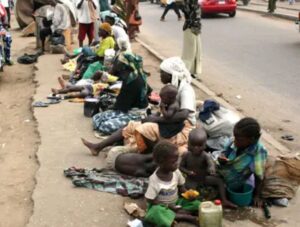
Streetism is the condition where children live, sleep, or spend most of their lives on the streets, often without care, guidance, or protection from any responsible adult. These children are not there because they want to be. No child dreams of growing up under a bridge or beside a gutter.
They are pushed there by hunger that never ends, by homes that no longer feel safe, by abuse too painful to speak of, by poverty that leaves families with impossible choices, and by a society that too often looks away.
A Childhood Interrupted :A Life Rewritten Too Soon
It is 10:30 p.m. The city is quieting down. Shops are closing. Mothers are tucking their children into bed, whispering soft goodnights.
But somewhere along a dimly lit street, a little girl Ama lies on a piece of cardboard. No blanket. No pillow. Just the cold ground beneath her fragile body. Her stomach aches, not from sickness, but from hunger she has learned to ignore. Every sound startles her. Every shadow feels like danger.
A few meters away, Kwame, barely 12, counts the coins he made from selling water all day. It is not enough. It is never enough. He should be counting numbers in a classroom. Instead, he is calculating how to survive tomorrow.
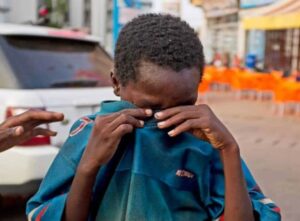
And sometimes… when they are chased away, shouted at, or even beaten for “loitering” or “hawking,” the message becomes painfully clear:
They are treated like offenders… instead of children in need of protection.
The Emotional Weight No Child Should Carry
Street children carry stories that would break the strongest hearts.
Stories of abuse.
Of nights filled with fear.
Of days filled with rejection.
Some have been beaten.
Some have been violated.
Some have been abandoned.
And yet, instead of being rescued, many are punished, arrested for hawking, driven away from public spaces, and spoken to with harshness instead of kindness,
Imagine being a child, already broken by life, and then being told through actions that you are the problem, how would you feel?
There is something deeply painful about a child who no longer expects kindness. A child who flinches when you try to help. A child who has learned that survival means enduring both hardship… and rejection.
Yet somehow, they still smile.
A fragile, tired smile but a smile nonetheless.
And that is what makes it even more heartbreaking.
Protect, Not Punish
Children on the streets are not criminals.
They are not nuisances, They are not burdens.
They are victims of circumstances beyond their control.
Punishing them for hawking, begging, or simply existing on the streets does not solve the problem. It deepens their trauma. It pushes them further into danger. It strips away what little dignity they have left.
Protection means:
Seeing them as children first, not offenders
Offering shelter instead of rejection
Providing education instead of punishment
Giving counseling instead of condemnation
Restoring their dignity instead of shaming their survival.
Because no child should be punished for trying to live.
Why Streetism Persists
Streetism is not a single problem, it is a web of failures:
Poverty that suffocates families
Domestic violence and broken homes
Lack of access to education
Neglect and abandonment
Migration in search of hope that never comes.
It is not that children choose the streets.
It is that the streets become the only place left for them.
The Role of the Ministry of Gender, Children and Social Protection
In Ghana, the Ministry of Gender, Children and Social Protection plays a critical role in changing this narrative from punishment to protection.
Through interventions such as rescue operations, rehabilitation programs, and reintegration efforts, the ministry works to take children off the streets and place them in safer, more supportive environments. They provide access to education, counseling, and healthcare, helping children begin to rebuild their lives.
Programs like LEAP (Livelihood Empowerment Against Poverty) aim to support vulnerable families so children are not pushed onto the streets in the first place.
But even with these efforts, the reality remains:
There are still too many children.
Too many stories.
Too many nights spent in fear.
And the work is far from done.
A Shared Responsibility We Can No Longer Ignore
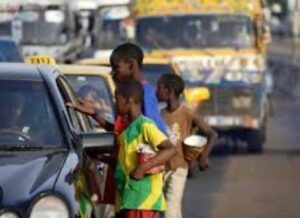
Streetism is not just a government issue, it belongs to all of us. Every time we look away, Every time we respond with anger instead of compassion, Every time we support systems that punish instead of protect, We contribute to the problem. These children are not invisible. We have simply chosen not to see them.
A Call That Should Break Us and Move Us
No child should have to fight just to exist.
No child should be punished for being vulnerable.
No child should grow up believing they are unwanted.
If it were your child… your sister… your brother…
Would you punish them for surviving?
Behind every dusty face is a dream that once lived.
Behind every outstretched hand is a silent cry for help.
Behind every child on the street is a future waiting to be saved.
Let us choose compassion over judgment.
Let us choose action over silence.
Let us choose to protect… not punish.
Because in the end, how we treat the most vulnerable among us defines who we truly are.
Written by Emelia Kafui Adjege.}
Public Affairs Unit,
Ministry of Gender, Children and Social Protection
Email: emeliakaffy@gmail.com