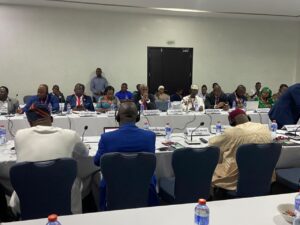
The Minister for Finance, Dr. Cassiel Ato Forson, has called on Public Accounts Committees (PACs) across the Economic Community of West African States (ECOWAS) to strengthen legislative oversight and deepen regional cooperation to combat financial crimes, corruption and illicit financial flows that continue to undermine development across the sub-region.
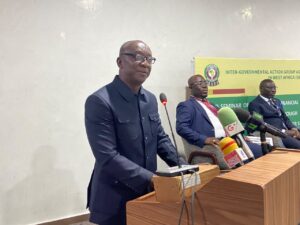
The Minister’s message was delivered on his behalf by the Coordinating Director (Technical) at the Ministry of Finance, Mr. Samuel Arkhurst, at the opening of the Second Regional Seminar on Preventing Financial Crimes and Enhancing Public Finance Management through Parliamentary Public Accounts Committees in ECOWAS Member States in Accra. The three-day seminar was organised by the Inter-Governmental Action Group against Money Laundering in West Africa (GIABA).
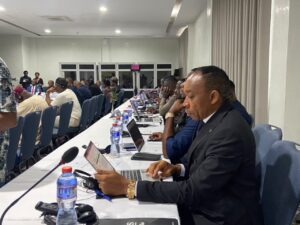
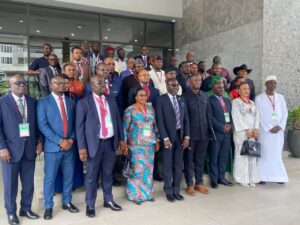
The seminar brings together Chairpersons, members and clerks of Parliamentary Public Accounts Committees, Supreme Audit Institutions, Financial Intelligence Units, anti-corruption agencies and other key stakeholders from across the ECOWAS region to strengthen their capacity to prevent financial crimes and improve public finance management through effective parliamentary oversight.
Dr. Forson noted that financial crime remains one of the greatest threats to sound public financial management and sustainable development in Africa. He cited estimates by the United Nations Economic Commission for Africa indicating that the continent loses nearly four per cent of its Gross Domestic Product annually through illicit financial flows.
According to him, resources lost through financial crimes could significantly improve governments’ fiscal space, reduce debt burdens and finance critical development programmes if effectively safeguarded.
He stressed that Public Accounts Committees occupy a unique position in promoting transparency and accountability by ensuring that public resources are properly managed and protected from abuse.
The Minister further encouraged participants to focus on practical and implementable solutions, stressing that the success of the seminar would be measured not by the number of presentations delivered but by the strength of partnerships forged, the quality of reforms adopted and the actions implemented upon participants’ return to their respective countries.
He also commended GIABA for its leadership in strengthening financial integrity across West Africa and reaffirmed Ghana’s commitment to supporting regional efforts to combat money laundering, corruption and other financial crimes.
Declaring the seminar officially open, Dr. Forson expressed confidence that closer collaboration among ECOWAS member states would strengthen public financial management systems and improve accountability throughout the region.
Meanwhile, Director General of GIABA, Mr. Edwin W. Harris Jr., said the organisation had made significant progress in strengthening anti-money laundering systems across West Africa over the past four years.
He disclosed that GIABA successfully mobilised member states and stakeholders to strengthen the organisation after it faced the risk of losing its status as the Financial Action Task Force (FATF)-Style Regional Body for West Africa.
Mr. Harris noted that member states are now more actively engaged, while GIABA has successfully completed the second round of mutual evaluations and commenced the third round, with Ghana becoming the first country to undergo the new assessment, expected to be adopted later this year.
He also announced that almost all ECOWAS countries previously placed on the FATF grey list have exited the list, with Côte d’Ivoire expected to complete its exit in October 2026.
According to him, the annual seminar is designed to equip Public Accounts Committees with the technical knowledge and practical tools required to hold public officials accountable, strengthen oversight institutions and enhance cooperation among ECOWAS countries in tackling corruption and financial crimes.
Mr. Harris expressed optimism that stronger collaboration among parliamentary committees, audit institutions and anti-corruption agencies would significantly improve accountability, transparency and the fight against illicit financial activities across the region.